Virtual Number for OTP: Receive Verification Codes Without a SIM
A virtual number lets you receive OTP codes online without your own SIM card. Learn how it works, the difference between VoIP and non-VoIP numbers, and when you should not use one.
· 5 min read
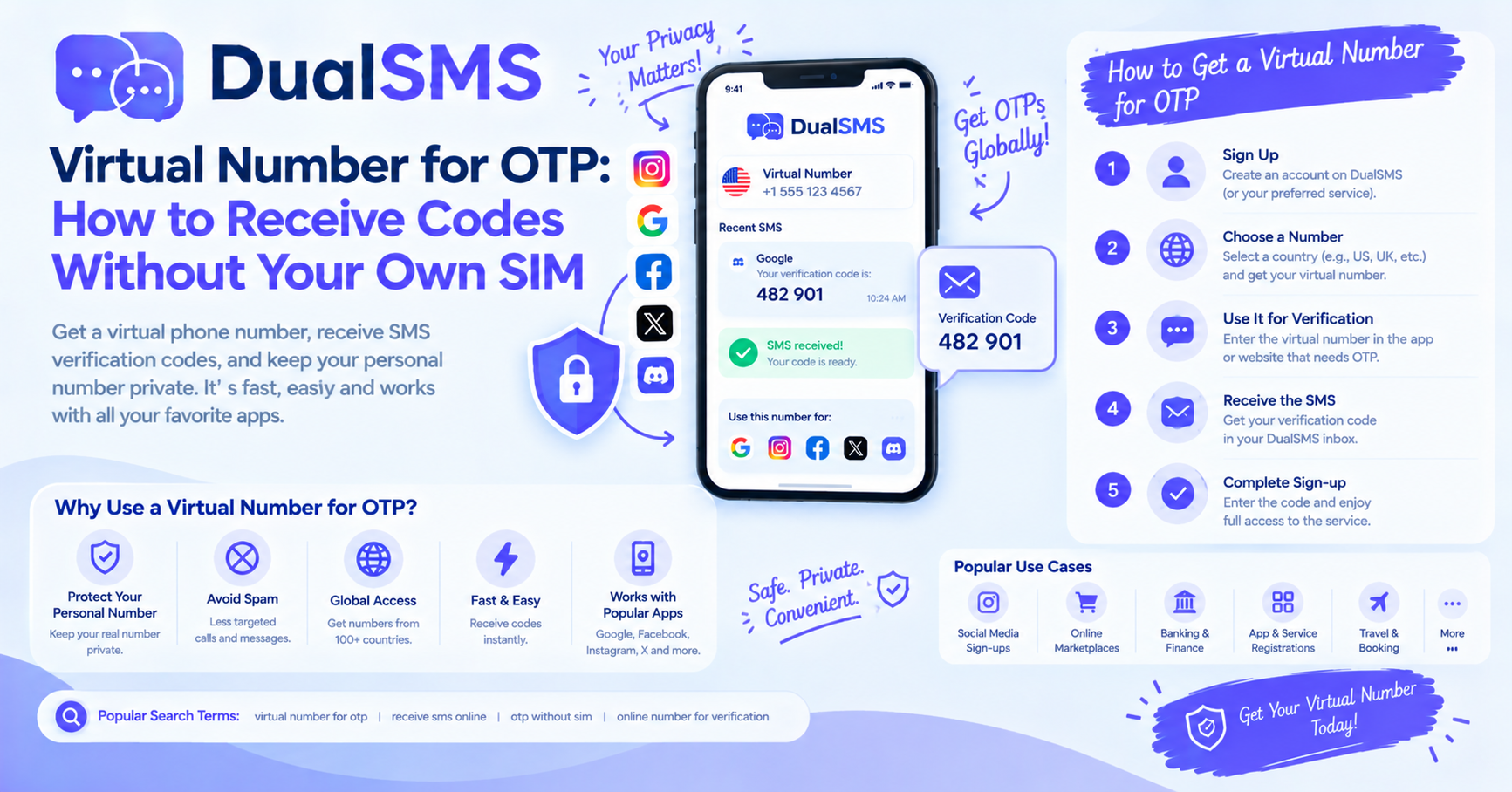
Need a verification code but don't have a spare SIM card? A virtual number for OTP lets you receive the one-time code online, in a browser, without putting a physical SIM in a phone. This guide explains what a virtual number is, the difference between non-VoIP and VoIP numbers, popular uses, when you should not use one, and how to get a code step by step with DualSMS.
What is a virtual number?
A virtual number is a phone number that isn't tied to a SIM card in your pocket. It receives text messages (SMS) and shows them to you on a web page or app. When a service such as an messaging app or website sends you an OTP (one-time password), the message goes to the virtual number, and you read the code on your screen.
People usually look for virtual numbers for three reasons:
- They don't have a second SIM or an old phone.
- They want to keep their personal number private.
- They need a temporary number to test or sign up for a service they may not use long term.
A virtual number is only a receiving tool for codes. It is not a full phone plan. You generally can't make calls with it, and it may not keep working forever.
Non-VoIP vs VoIP numbers in plain words
You will see two main types of virtual numbers, and the difference matters.
Non-VoIP numbers are linked to a real mobile carrier network. They look and behave like regular SIM numbers to the services that check them. Because they come from a carrier, many apps accept them without issue. They usually cost more than VoIP numbers.
VoIP numbers (Voice over Internet Protocol) are issued over the internet rather than by a mobile carrier. They are cheaper and easier to set up, but some services are stricter about them and may reject them during sign-up. If a VoIP number doesn't work for one app, it is not always a sign that the code is broken. The app may simply be blocking that number type.
In short: non-VoIP numbers are usually more accepted, and VoIP numbers are more basic and cost-effective. Whichever you use, the key question is whether the specific service accepts it.
Is there a way to get OTP without a SIM?
Yes. The most common method is a disposable or rented number that receives SMS in a web dashboard. You pick a number for the service you need, the platform displays any text that arrives, and you copy the code into the sign-up form. You do not need a SIM card, a phone plan, or a mobile app.
This works well for one-time verification. It is less suitable for accounts you plan to rely on for years, because you may lose access to the number later.
Popular uses for a virtual number
Here are some of the most common situations where people use a virtual number for verification. Each link goes to the DualSMS page for that service.
- Telegram: Many people sign up for Telegram with a number they don't want to share publicly. See receive SMS for Telegram.
- WhatsApp: WhatsApp requires a phone number to register. If you want to keep your main number separate, see receive SMS for WhatsApp.
- Instagram and Threads: Social accounts often ask for a phone number during sign-up. See receive SMS for Instagram and Threads.
- AI tools: Many AI chat services request a phone number for verification. See receive SMS for AI Chat.
- Gaming and betting-style platforms: Some gaming sites ask for a phone number during registration. Examples include 11win, 1xGame, 101Rummy, and 13lggame.
If the service you need isn't listed here, check the full list of supported platforms on the DualSMS site.
When NOT to use a virtual number
A virtual number is useful for low-stakes verification, but there are situations where it is the wrong choice. Please avoid it for the following:
- Banking and UPI: Bank accounts and UPI payment apps are tied to the mobile number registered with your bank, which is linked to your identity. Using a temporary number can cause failed verifications, locked accounts, or problems with transactions. Use the number your bank has on file.
- Your main email recovery: If a number is the recovery method for your primary email, you could lose access to that email, and with it, your other accounts, if you can no longer receive codes. Use a number you control long term.
- Government, tax, or identity services: These usually require a verified number tied to your legal identity.
- Any account you cannot afford to lose: If you may need to recover the account years from now, a temporary number may not be there when you need it.
Also remember that every platform has its own terms. Use virtual numbers only for accounts where that is allowed, and don't use them to get around age limits, bans, or other restrictions that a service has placed on you.
Step-by-step: getting an OTP with DualSMS
Here is how the process works on DualSMS.
- Choose your service. Find the platform you need, such as Telegram, WhatsApp, or Instagram and Threads. Each page lists the service you're verifying.
- Get a virtual number. Select the number for your chosen service and complete the purchase. Pay per number, so you only buy what you need.
- Enter the number in the app. Go to the sign-up or verification screen of the app and enter the virtual number. Choose the country code shown on the DualSMS page if it is required.
- Wait for the SMS. The code should appear on the DualSMS page. In most cases it arrives within seconds, but delivery depends on the service and network, so be patient for a short time.
- Copy the code and finish sign-up. Paste the OTP into the app. Then complete your profile and set a strong password.
- Check the refund rule if no SMS arrives. DualSMS offers an automatic refund if no SMS is received. Review the terms on the site before you buy.
- Secure the account. If the service lets you add a recovery email or a second verification method, set one up. Remember that a temporary number may not be available later.
Tips for a smooth verification
- Try a different number if the first one is rejected by the app. Some services reject certain number types.
- Make sure you enter the number in the correct format, including the country code.
- Don't request too many codes in a short time, as apps may temporarily block the attempts.
- Use the virtual number only for accounts that are suitable for temporary use.
- Keep your banking, UPI, and main email recovery on your own verified number.
Final thoughts
A virtual number for OTP is a practical way to receive verification codes without a SIM card, especially if you value privacy or only need a number for a short-term task. Understand the difference between non-VoIP and VoIP numbers, use them for appropriate services, and keep your important accounts on your own number.
Ready to try it? Visit DualSMS, choose your platform, and get your code in seconds. Pick a service page to start, such as Telegram or Google, Gmail, and YouTube, and follow the steps above.
Questions people ask
What is a virtual number for OTP?
It is a phone number that receives SMS verification codes and shows them to you online, so you don't need your own SIM card in a phone.
What is the difference between non-VoIP and VoIP numbers?
Non-VoIP numbers are linked to mobile carrier networks and are usually accepted more widely. VoIP numbers are issued over the internet, cost less, and some services may reject them.
Can I use a virtual number for banking or UPI?
It is not recommended. Banking and UPI are tied to the mobile number registered with your bank, so use the number on file with your bank.
Why didn't my OTP arrive on a virtual number?
The app may not accept that number type, or delivery may be delayed. Try a different number, check the format and country code, and review the refund terms if no SMS arrives.
Keep reading
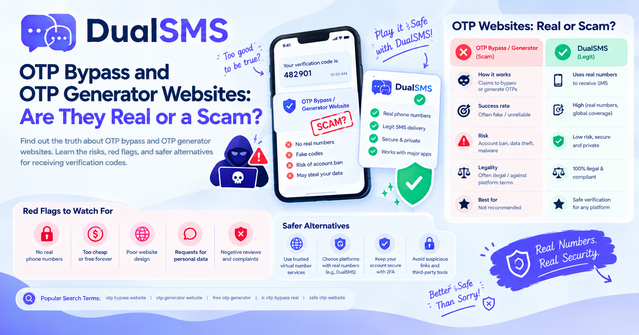
OTP Bypass and OTP Generator Websites: Real or a Scam?
OTP bypass and OTP generator websites promise to create login codes for any app. No website can do that for an app it doesn't control, so these sites are almost always scams that steal accounts or money.
· 5 min read
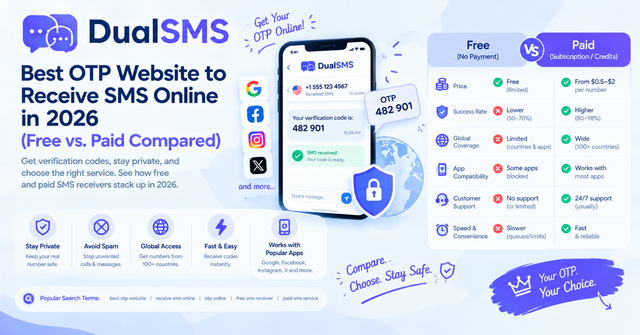
OTP Website Guide: Free vs. Paid Ways to Receive SMS Online (2026)
An OTP website gives you a temporary number to receive one-time SMS codes without your own SIM. Here is how free public sites compare with paid private numbers, and why free ones often fail.
· 4 min read
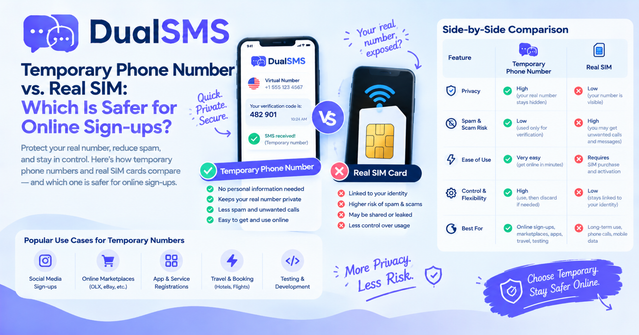
Temporary Phone Number vs. Real SIM: Which Is Safer for Sign-Ups?
A temporary phone number is the better choice for one-time sign-ups where you want to keep your personal number private. A real SIM is the better choice for banking and your main accounts.
· 5 min read