Temporary Phone Number vs. Real SIM: Which Is Safer for Sign-Ups?
A temporary phone number is the better choice for one-time sign-ups where you want to keep your personal number private. A real SIM is the better choice for banking and your main accounts.
· 5 min read
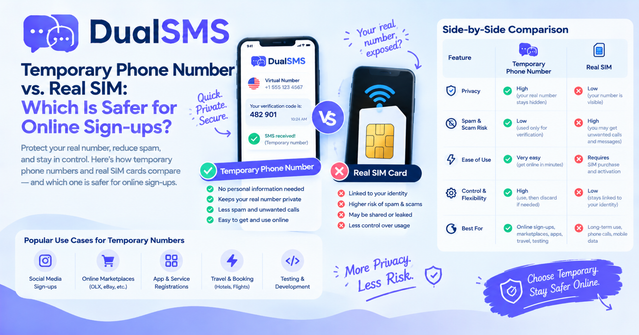
A temporary phone number is generally safer for one-time sign-ups, because your personal number stays out of the account. A real SIM is generally safer for banking and your main accounts, because you can keep receiving codes and recover access later. The right choice depends on how long you need the account and how much it matters.
Quick comparison: temporary number vs. real SIM
| Factor | Temporary number | Real SIM (your own line) |
|---|---|---|
| Privacy | Your personal number is not attached to the account | Your personal number is linked to the account |
| Cost | Pay for each number you need | Usually already covered by your phone plan |
| Reuse | Usually meant for a single verification | Works for every account and every future code |
| Account recovery | Weak: if you lose the number, you may lose access | Strong: you can receive recovery codes whenever you need them |
| Spam risk | Higher: numbers can be shared or already used, so some services may block them | Lower for most people, but your number can still end up on marketing lists once it is public |
What a temporary number is
A temporary number is a virtual phone number that receives SMS messages on the internet. You pick a service, such as WhatsApp or Telegram, enter the number, and the verification code appears on the page. You use that code to finish the sign-up, and the number does not need to be your own.
This is useful when a site asks for a phone number only to confirm you are a person, and you do not want to hand over your real one.
Privacy: where temporary numbers win
With a real SIM, your number becomes a identifier. It can be used to link accounts across services, appear in contact-matching features, and be shared when a platform sells or exposes data. Once a number is public, it is hard to take back.
A temporary number keeps that link out of the account. If you sign up to a forum, a shopping site, or a one-off trial, you are not giving that service your personal line.
Privacy is not the same as anonymity, though. The service still knows your email, IP address, and what you do on its site. A temporary number only protects the phone number itself. For a broader look at this, see our earlier privacy-focused post on this blog.
Cost: pay per use vs. existing plan
A real SIM usually costs you nothing extra for verification, because your phone plan already covers incoming texts. A temporary number is a separate purchase, so it makes sense for a specific sign-up rather than daily use.
To keep costs sensible:
- Buy a number only when you need one for a specific verification.
- Do not pay for a number you will not use.
- Check the page for the service you need before you buy.
Reuse: why temporary numbers are not for everything
A temporary number is normally meant for one verification. You cannot count on it to receive a code next month, when you change your password, or when you log in from a new device. A real SIM stays with you and keeps working for all of these.
This is the main reason temporary numbers suit one-time sign-ups and real SIMs suit long-term accounts.
Account recovery: the biggest risk with temporary numbers
Many accounts use the phone number for password resets and security checks. If that number was temporary, you may not be able to receive those codes later. If you lose access to your email too, recovery can become very difficult.
Before you rely on a temporary number, ask yourself:
- Do I need this account for more than a few days?
- Can I add a recovery email I control?
- Can I save backup codes, if the service offers them?
- Would losing this account cause real problems?
If the answer to the first or last question is yes, use a real SIM or a number you can keep.
Spam risk: a fair assessment
Your real number can receive marketing texts once it is public, and it is hard to stop. That is a privacy cost in its own right.
Temporary numbers have a different problem. Because many people use the same numbers, some may already be associated with spam, or some services may refuse them. If a code does not arrive, that is a common reason, and it is one reason some sites offer a refund when no SMS arrives.
Neither option is risk-free. The useful question is which risk you can live with for this particular account.
So which is safer?
Neither option is safer in every case. Here is a plain verdict:
- Use a real SIM for banking, payment apps, your main email, and any account you rely on every day. You need reliable recovery, and you need to receive codes for years.
- Use a temporary number for one-time sign-ups, trials, forums, and places where you want to keep your personal number out of the account.
- Use a real SIM if the service requires identity-linked verification or you cannot afford to lose access.
If you are unsure, ask whether you would be upset to lose this account in a month. If yes, use a number you control.
Practical tips for using a temporary number
- Use it only for the verification you need, then stop.
- Set up a recovery email on the account as soon as you can.
- Save any backup or recovery codes the service gives you.
- Do not use temporary numbers to bypass rules or to create accounts that a service forbids.
- If a code does not arrive, wait a short time, then try a different number or check the service page for guidance.
When to use DualSMS
DualSMS is built for the one-time verification case. You choose a service, pay for a number, and see the code appear in seconds. If no SMS arrives, you get an automatic refund. We also offer temporary email for sign-ups that only ask for an address.
You can start with the page for the app you need. Popular examples include Discord, Instagram and Threads, and Google, Gmail, and YouTube.
Frequently asked questions
Is a virtual number safe to use? It can be, for one-time verification. It keeps your personal number out of the account. It is not a good choice for accounts you need to recover later.
Can I use a temporary number for banking? No. Use a real SIM for banking and payment accounts, because you need reliable access and recovery.
Why did my temporary number not receive a code? Some services block certain numbers, and some numbers are already used by others. Try again with a different number, or check the service page.
Is a temporary number the same as a real SIM? No. A real SIM is tied to your identity and phone plan. A temporary number is usually for a single verification.
Is a temporary number good for privacy? It protects your personal phone number from the account. It does not hide your email, IP address, or activity on the site.
Call to action
Need one code for a sign-up you do not want to link to your own number? Browse our service pages, pick the app you need, and get your number in a few clicks.
Questions people ask
Is a virtual number safe to use?
It can be, for one-time verification, because it keeps your personal number out of the account. It is not a good choice for accounts you need to recover later.
Can I use a temporary number for banking?
No. Use a real SIM for banking and payment accounts, because you need reliable access and recovery.
Why did my temporary number not receive a code?
Some services block certain numbers, and some numbers are already used by others. Try a different number or check the service page for guidance.
Is a temporary number good for privacy?
It protects your personal phone number from the account. It does not hide your email address, IP address, or activity on the site.
Keep reading
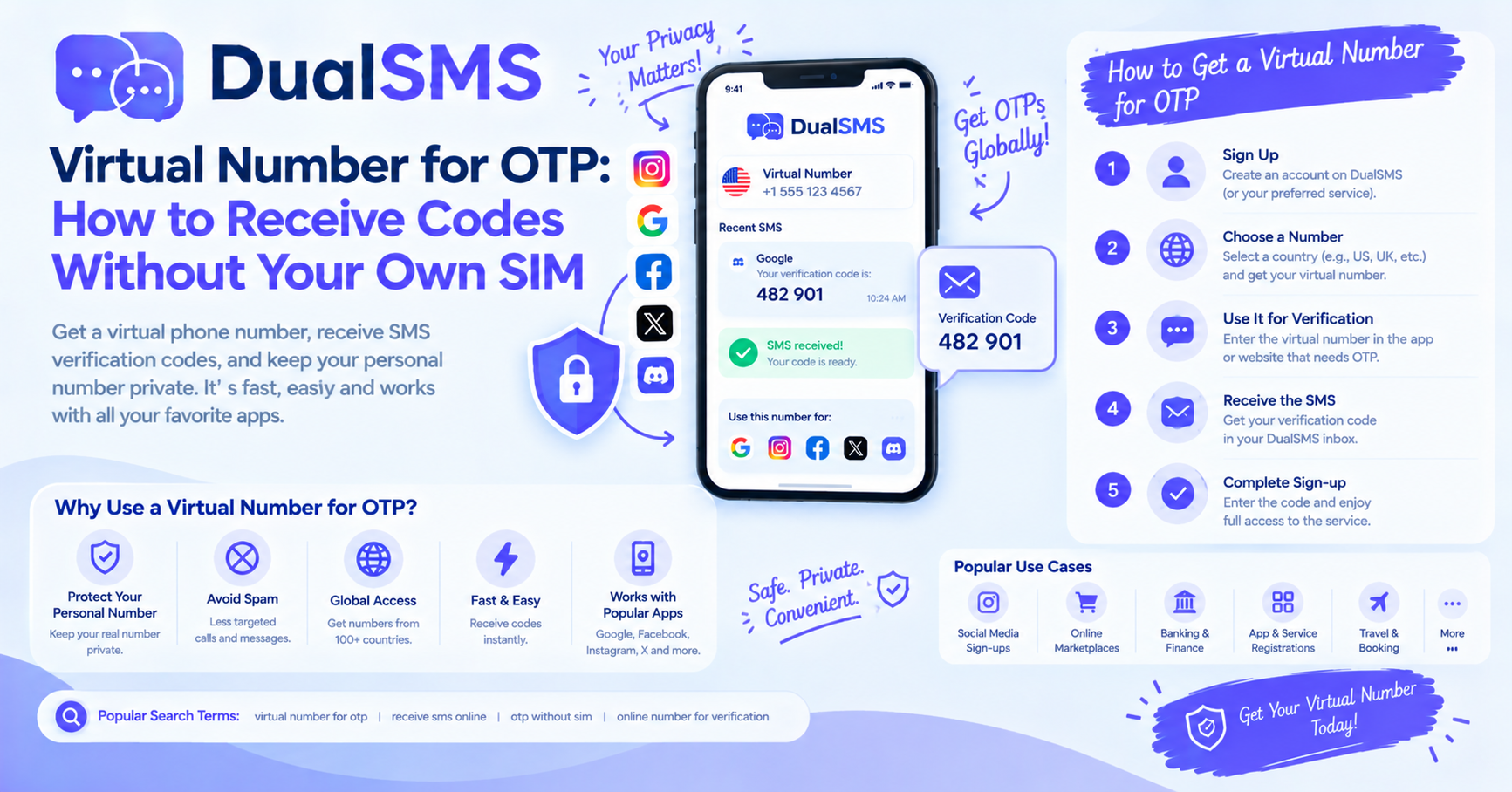
Virtual Number for OTP: Receive Verification Codes Without a SIM
A virtual number lets you receive OTP codes online without your own SIM card. Learn how it works, the difference between VoIP and non-VoIP numbers, and when you should not use one.
· 5 min read
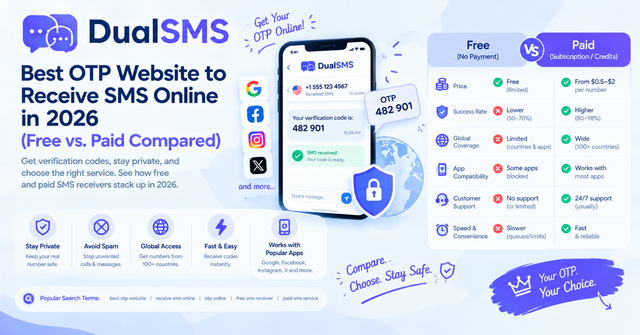
OTP Website Guide: Free vs. Paid Ways to Receive SMS Online (2026)
An OTP website gives you a temporary number to receive one-time SMS codes without your own SIM. Here is how free public sites compare with paid private numbers, and why free ones often fail.
· 4 min read
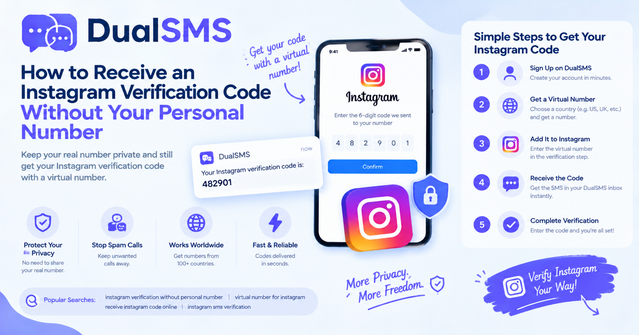
Instagram Verification Code Without Your Personal Number
Instagram code not arriving, or you'd rather not share your personal number? Here are quick fixes and a step-by-step way to receive the code with a virtual number.
· 3 min read